
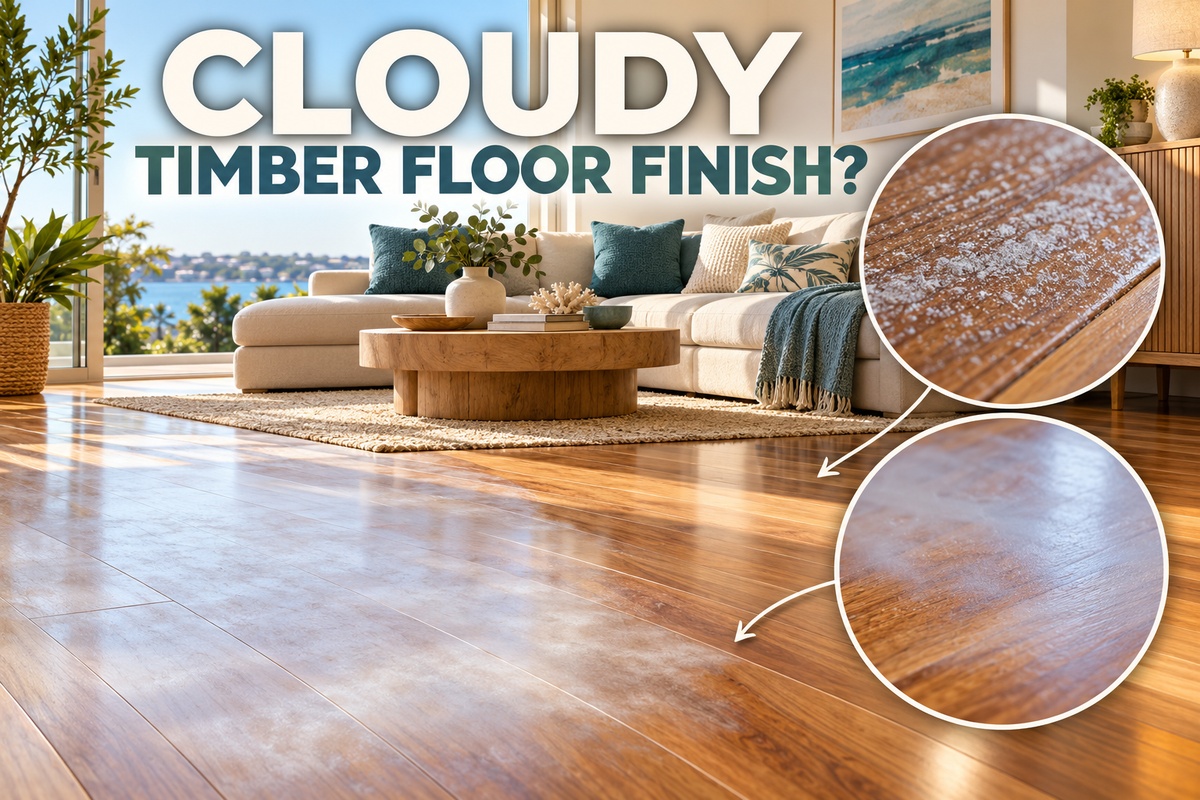
A cloudy timber floor finish can come from residue sitting on the surface, a maintenance layer that has built up, or a problem within the coating itself. Moisture can also affect both the finish and timber. Start by identifying the floor and what changed before the haze appeared. A small, manufacturer-approved cleaning test may help identify removable film; persistent cloudiness, peeling or board movement needs assessment before more cleaner or finish is added.
| What you notice | Possible explanation | Best next step |
|---|---|---|
| Haze appeared after changing cleaners | Residue or an incompatible cleaning product | Check the product and test the approved cleaning method locally |
| Swirls and footprints return after mopping | Cleaner film, soil redistribution or maintenance buildup | Check dilution, pad condition and previous products |
| A milky look appeared after refinishing | An application, drying or coating issue | Contact the applicator before cleaning or altering the surface |
| Haze remains after suitable cleaning and drying | A film not removed by routine cleaning, or a coating defect | Arrange an assessment rather than escalating household remedies |
| Peeling or flaking accompanies the haze | A finish integrity or adhesion problem | Assess coating condition and repair options |
| Cloudiness occurs with swelling or cupping | Possible moisture involvement | Find the moisture source and inspect the flooring system |
| A dull area follows a busy walkway | Wear or fine scratching rather than removable residue alone | Assess the remaining finish and suitability for recoating |
What Can Cause a Cloudy Timber Floor Finish?
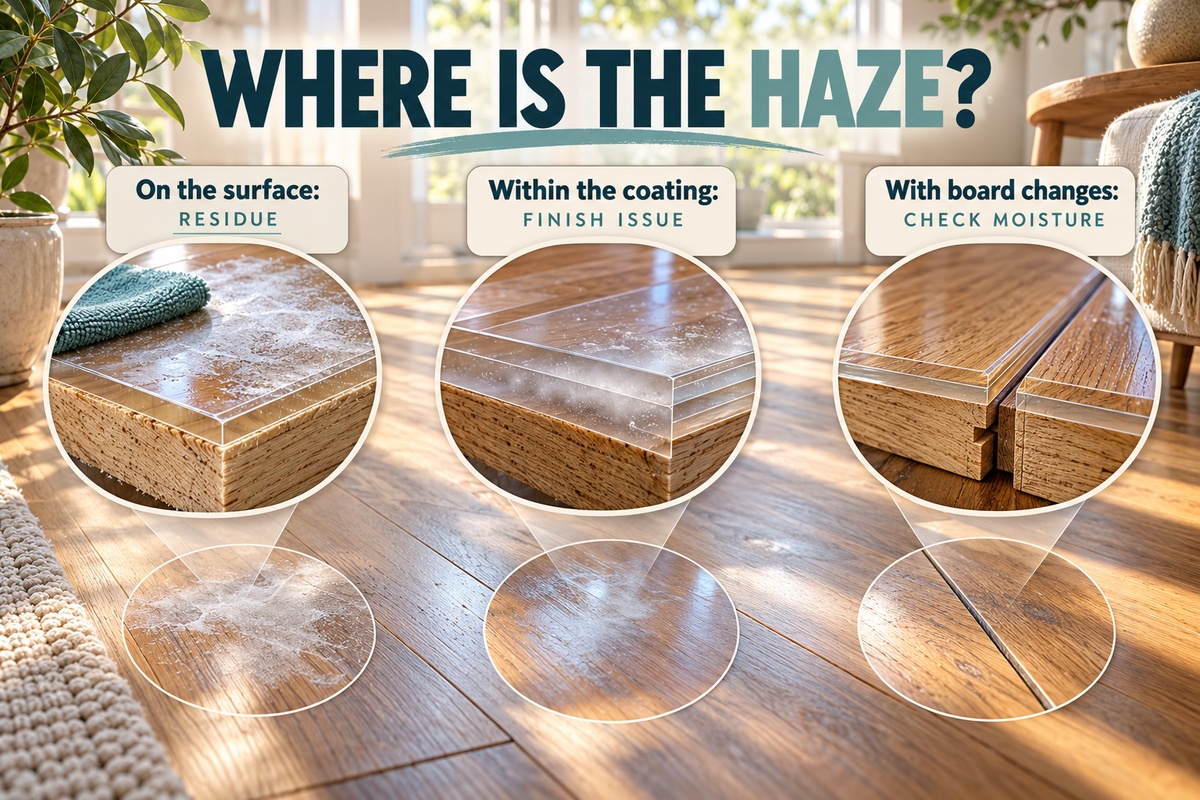
“Cloudy” describes an appearance rather than a single defect. The treatment depends on whether the material scattering the light is on the finish, within it or associated with the timber beneath.
Cleaning residue on the surface
Excess cleaner, unsuitable products and a dirty mop pad can leave a film instead of a clear surface. The room may look acceptable while wet, then develop streaks when dry. Repeating the same routine can redistribute the film without removing its cause.
Check whether the cleaner is ready to use or a concentrate. If dilution is required, follow the specified instructions rather than adding extra product for a supposedly stronger clean. Water quality may also be relevant where mineral residue is suspected, but it should not be treated as the explanation for every milky floor.
Built-up polish, wax or other care layers
A cleaner and a polish perform different jobs. Some maintenance products intentionally leave a layer, which can become uneven or require a specified removal process. That layer is different from the original protective coating.
Product names matter. “Shine”, “restore” or “refresh” on a bottle does not establish compatibility with every timber floor. Record previous products so the person assessing the floor can determine whether a removable care layer is present and what the underlying finish can tolerate.
An application or curing problem
Cloudiness that appears during or soon after refinishing needs a conversation with the applicator. Coating conditions, the readiness of underlying layers and product compatibility can affect the appearance. Ordinary cleaning is not a reliable treatment for something contained within the coating film.
Some changes may need observation under the manufacturer’s specified conditions, while others require corrective work. There is no responsible universal promise that a new milky finish will clear within a set number of days.
Moisture and other surface changes
Leaks, excessive wet cleaning and water exposure can affect a timber floor. Cloudiness accompanied by changing board shape or other physical damage deserves a wider investigation than a surface-cleaning problem.
Fine scratching and wear can also reduce clarity. A dull traffic lane is not automatically a layer that can be wiped away. The inspection needs to distinguish unwanted film from a finish that has been physically worn.
Use the Timeline and Pattern to Narrow the Cause
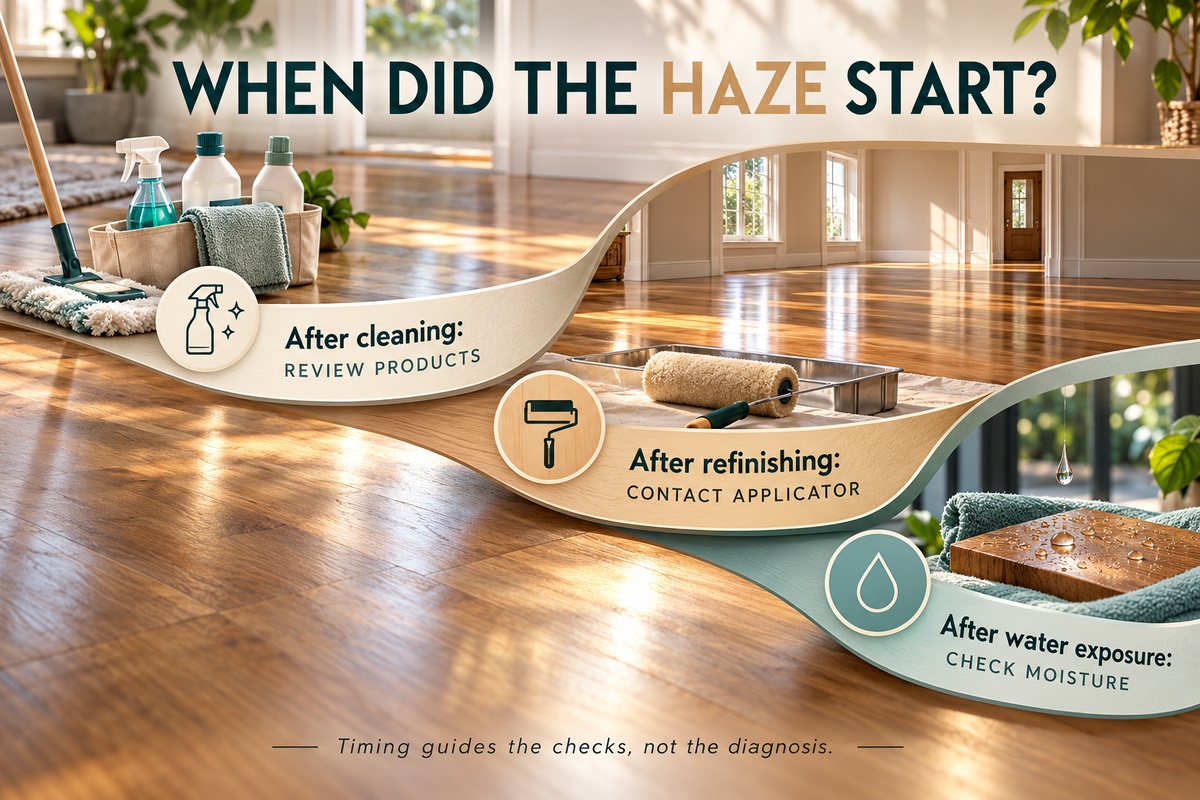
Write down when the haze first appeared and what happened immediately beforehand. A different cleaner, a new polish, recent building work, a spill or refinishing provides a useful starting point. Timing helps prioritise checks, but it does not prove the cause: more than one issue can occur on the same floor.
Look at the pattern in normal light and across reflected daylight. Mop tracks can suggest a cleaning-related layer, while repeated dullness along a walkway may indicate wear. A local mark near a water source deserves a moisture check. Fresh application lines are useful information for the coating applicator, especially if the finish was only recently completed.
Photograph the whole room as well as the affected area. Keep the bottles or labels from products used, and note whether the surface feels sticky, rough or loose. Avoid scratching, soaking or applying strong chemicals to create a diagnosis. Those actions can alter the evidence and introduce an additional repair problem.
How to Check for Surface Residue Without Overcleaning
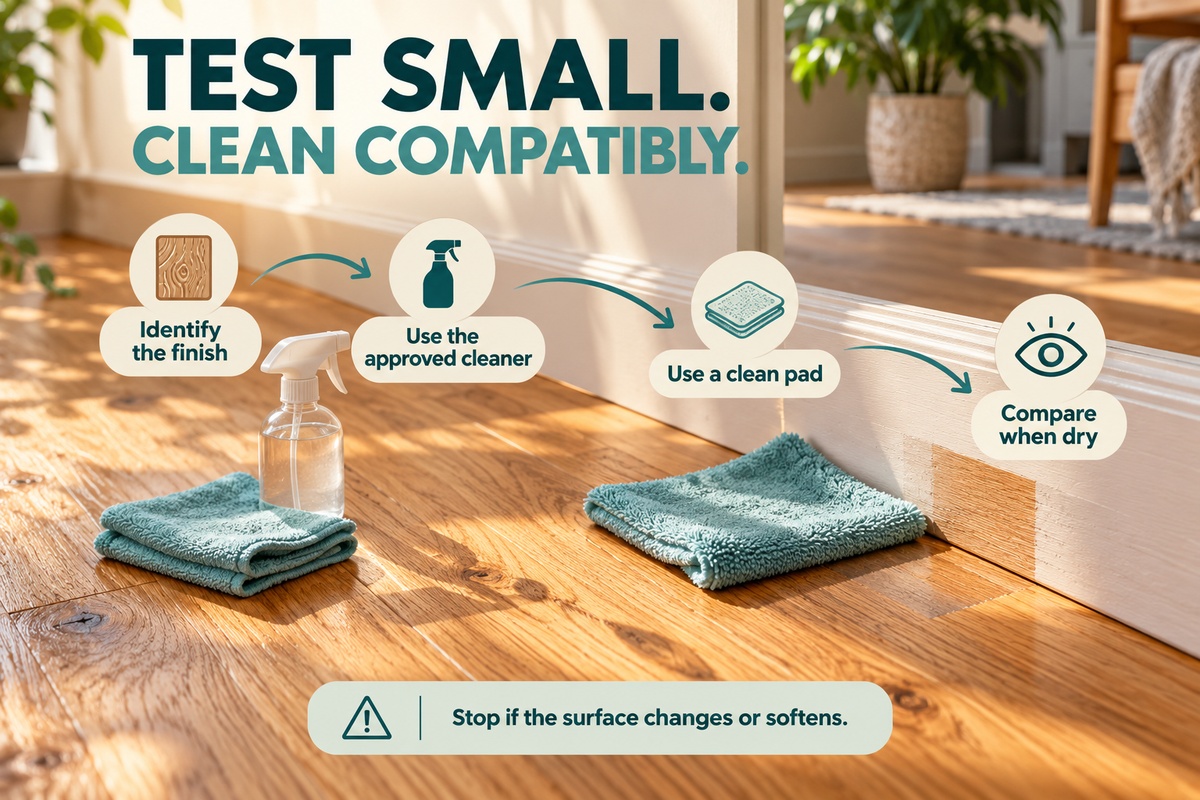
An initial check should be limited and matched to the actual floor. If the coating is fresh, peeling or visibly damaged, ask the installer or a flooring specialist before testing it.
- Identify the flooring and finish using product records where available.
- Read the floor and coating manufacturers’ maintenance instructions.
- Remove loose grit with suitable dry-cleaning equipment.
- Choose a small, inconspicuous test area rather than treating the whole room.
- Use only the permitted cleaner, dilution, applicator and moisture level.
- Use a clean pad so removed material is lifted rather than spread.
- Let the test area dry fully before comparing it with the surrounding floor.
- Stop if the treatment changes the colour, softens the surface or worsens the appearance.
If the dry test area becomes clearer, removable surface material may be involved. If it does not improve, that does not prove the whole floor needs sanding: the residue may require a different approved removal process, or the problem may be within the finish.
The NWFA’s wood floor maintenance guidance recommends cleaning suited to the finish and avoiding wet and steam mops. A sensible cleaning check respects those limits rather than flooding the floor to see whether the haze disappears.
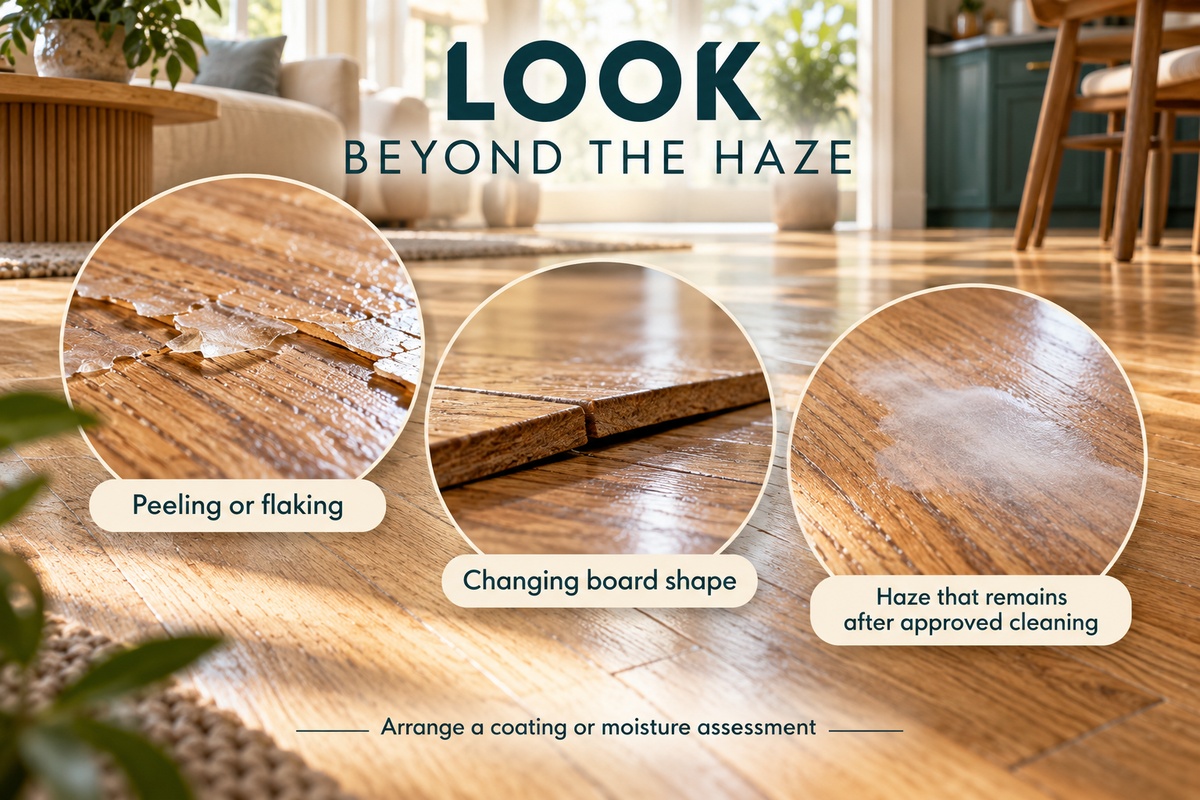
When Cloudiness Needs a Coating or Moisture Assessment
Some signs are a reason to stop repeating the cleaning cycle. They help define what a professional inspection needs to establish.
Persistent haze or a newly finished floor
Where the appearance remains after suitable cleaning, the next question is whether unwanted material remains above the coating or the coating itself has changed. A specialist may need to identify care layers, assess the surface and check compatibility before proposing treatment.
If refinishing was recent, involve the original applicator and retain the product details. Explain the timing, room conditions and cleaning history. Applying another polish or finish before that conversation may make the original issue harder to isolate.
Peeling, swelling or changing board shape
Flaking and peeling are physical finish defects, not ordinary dirt. New coating should not be placed over a failing surface without understanding why it failed and how much material needs removal.
Swelling, cupping, softness or a continuing leak calls for a moisture and condition assessment. Drying and repair requirements depend on the construction and damage. A clearer top surface would not resolve wet supports or an ongoing source of water beneath the boards.
Cleaning, Recoating or Sanding: Which Route Fits?
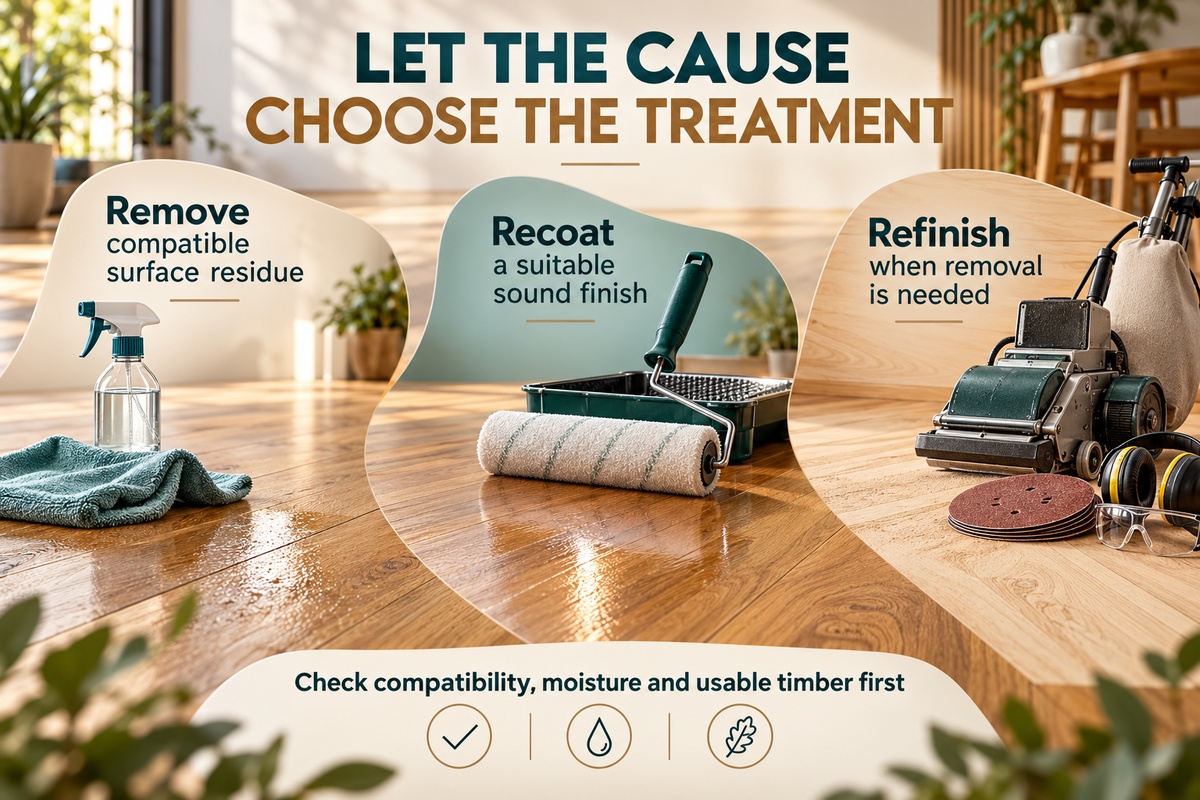
The right route follows the diagnosis rather than the severity of the photograph. A dramatic surface film may be removable, while a subtle coating defect can need more extensive preparation.
Cleaning or controlled care-layer removal
If unwanted material sits above a sound finish, suitable cleaning or a manufacturer-compatible removal process may restore clarity. Routine floor cleaner does not necessarily remove accumulated polish or wax.
Removal needs to protect the underlying coating and joints. Avoid borrowing a stripping recipe intended for vinyl, tiles or a different timber finish. Bona’s explanation of cloudy wood floors identifies several possible causes, reinforcing the need to establish what is actually present before choosing a product.
Professional preparation and recoating
A suitable recoat can renew worn protection where the existing surface is sound and compatible. Residue, maintenance layers and contamination need assessment first because they can interfere with adhesion.
Recoating is not a way to bury an unidentified cloudy layer. Discuss the preparation and expected result through the available timber floor polishing services, including whether local treatment would leave an obvious boundary.
Sanding and refinishing
Where the finish needs removal, sanding may form part of the repair. Before choosing it, check usable timber, previous sanding, engineered wear layers and factory surface features.
A floor sanding assessment in Sydney should establish whether the floor can tolerate the proposed work. Moisture problems still need resolving first, and isolated damaged boards may need repair before a new finish is applied.
| Repair route | Suitable starting condition | What must be established first |
|---|---|---|
| Approved routine cleaning | Light removable residue on a sound surface | Correct cleaner and method |
| Controlled care-layer removal | Unwanted polish or wax above a suitable coating | Compatible removal system and underlying finish condition |
| Preparation and recoat | Sound surface with suitable wear | Contamination removal and reliable adhesion |
| Sand and refinish | Finish requiring removal on sandable timber | Remaining timber and correction of the cause |
| Board repair plus finishing | Local timber damage as well as a finish issue | Sound support, suitable conditions and matching stock |
Keep the Haze From Returning
Once the cause is understood, the maintenance routine should be simple and repeatable. More product and more scrubbing are not substitutes for compatibility.
- Keep the floor and finish maintenance instructions together.
- Distinguish routine cleaner from products that leave a maintenance layer.
- Measure concentrate as directed and do not dilute ready-to-use products unless instructed.
- Replace dirty pads during cleaning and wash them as specified.
- Remove loose grit before damp cleaning.
- Keep excess moisture away from boards and joints.
- Introduce a new product only after confirming that it suits the finish.
- Follow the applicator’s aftercare advice for a newly finished floor.
If the same cloudy pattern returns, review what changed rather than immediately repeating the previous repair. Returning residue and a recurring moisture source require different responses.
Frequently Asked Questions
A cloudy surface often prompts the same immediate repair questions. These answers explain what can be established without assuming the cause from appearance alone.
Why does my timber floor look cloudy after mopping?
Possible causes include excess cleaner, a dirty pad, an unsuitable product or a maintenance layer already on the floor. Wear and moisture can also contribute. Review the cleaning history and assess a small area using the method approved for the finish.
Can vinegar remove a cloudy timber floor finish?
Do not assume a vinegar mixture is suitable. Household remedies can affect the coating or alter its sheen. Use the flooring and finish manufacturers’ instructions; a product suitable for another household surface may be inappropriate for timber.
Will adding polish make the floor clear again?
Not reliably. Polish can add another layer over the problem and complicate later preparation. Establish whether the haze is residue, a care layer, wear or a coating defect before adding a shine-producing product.
Does a cloudy finish mean the timber is ruined?
No. The issue may be limited to surface material or the coating. However, cloudiness with swelling, softness or an ongoing leak needs a broader inspection. The condition of the timber cannot be established from the cloudy appearance alone.
Does every cloudy floor need sanding?
No. Suitable cleaning, care-layer removal or recoating may be options. Sanding is considered when the diagnosis requires it and the floor has enough usable timber. Product identification and surface assessment should come before deciding the treatment.
Get a Cloudy Timber Floor Assessed in Sydney
For a cloudy timber floor finish, share when the problem started and what has been applied to the floor.
Photographs, cleaner labels and coating records help make the assessment more useful. Include any leaks, movement or recent refinishing.
Contact 5Star Wood Care Sydney to discuss whether your floor needs cleaning advice, repair and restoration, recoating or sanding.