

Decking oil drying time depends on the exact product, the weather and the slowest board on your route. Walk only after the maker’s stated foot-traffic interval after the final coat, once the surface conditions meet its instructions. Touch dry and recoat times describe earlier milestones. Furniture, rugs and pets may need a different plan. If you want the job and access timetable coordinated, see our deck sanding and oiling Sydney service.
| When you want to… | Use this milestone | Practical check |
|---|---|---|
| Judge early surface drying | Touch dry | Surface has begun to set under the product’s conditions |
| Apply another coat | Recoat time | First coat and conditions meet the label’s requirements |
| Walk on the deck | Explicit light foot-traffic or return-to-use time | Count from the final coat on the route and check the slowest boards |
| Allow a light shower | Product’s rain-ready milestone, if specified | Match rain type and conditions to the stated limits |
| Return furniture and rugs | Product’s furniture or full-use guidance | Lift items into place and delay anything that traps moisture if required |
| Investigate stickiness | Compare with the actual product’s drying behaviour | Document local pools or deck-wide tack and hold access until resolved |
Decking Oil Drying Time by Product and Milestone
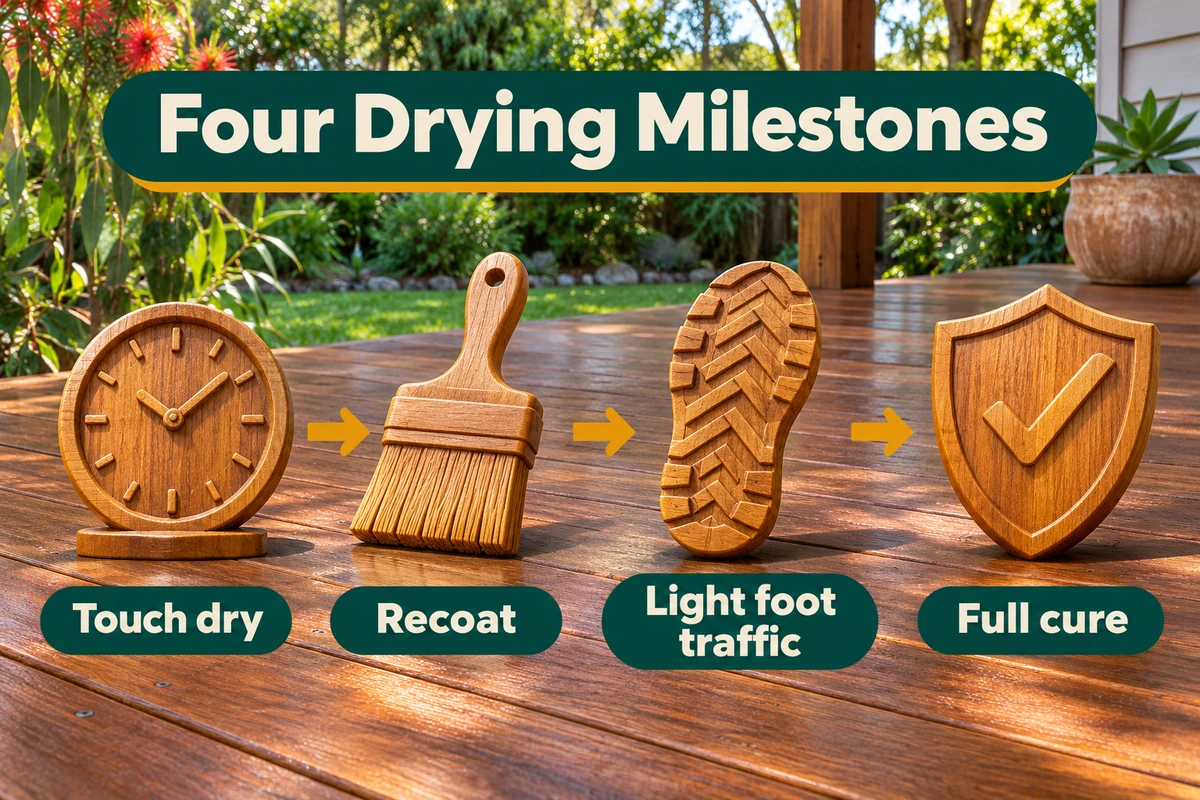
Start by locating the full product name on the tin and matching it to the manufacturer’s current instructions. Use the milestone for the activity you have in mind, because different stages can have very different waiting periods.
Touch dry and ready to recoat
A coating can feel dry at the surface before it can support a shoe, a pet’s claws or a chair leg. Recoat time identifies the minimum conditions for applying another coat within a particular system. For example, Intergrain’s UltraDeck Timber Oil data sheet gives a one-hour touch-dry time and a three-hour recoat time at 15–35°C and below 85% humidity. It provides a separate cooler-weather schedule. Those figures describe the coating stages and should be read alongside the manufacturer’s advice about using the deck.
A label or web page may give a value for one milestone and omit another. If you can find recoat timing but no explicit walking or furniture guidance, ask the manufacturer or applicator what applies to return to use. That question is more useful than guessing a multiplier from the time printed on the tin.
Foot traffic, weather exposure and full cure
Foot-traffic guidance usually concerns ordinary light access. Full cure is a later stage for products that harden, and the product may give separate limits on furniture loads and rain. For example, Bona’s Australian Decking Oil technical sheet calls for at least 24 hours before deck use at its stated 20°C and 60% relative humidity benchmark. It says cooler conditions, higher humidity or exotic timber can extend drying. A product description that uses the word “dry” without naming the stage deserves a closer look before access is scheduled.
Named product examples
| Product | Published point | How to use the figure |
|---|---|---|
| Intergrain UltraDeck Timber Oil | Touch dry 1 hour, recoat and light rain readiness 3 hours in stated ideal conditions | Use the cooler schedule when applicable and obtain separate foot-traffic guidance |
| Bona Decking Oil | Minimum 24 hours before deck use at the stated benchmark | Extend as needed in cooler or more humid conditions and check the route |
| CUTEK Extreme CD50 | Penetration can take several days. Recoat once dry and non-greasy | Follow product-specific access guidance and assess the actual timber |
CUTEK’s instructions for Extreme CD50 explain why species, moisture, weather and the second coat can affect penetration. A product that diffuses into the wood behaves differently from one whose instructions specify full cure for a film. Even two water-based products can have different schedules, so the tin and application conditions come first.
Read more · Deck Oiling for Weathered Decks Sydney – Restore & Protect
How to Check the Slowest Part of the Deck
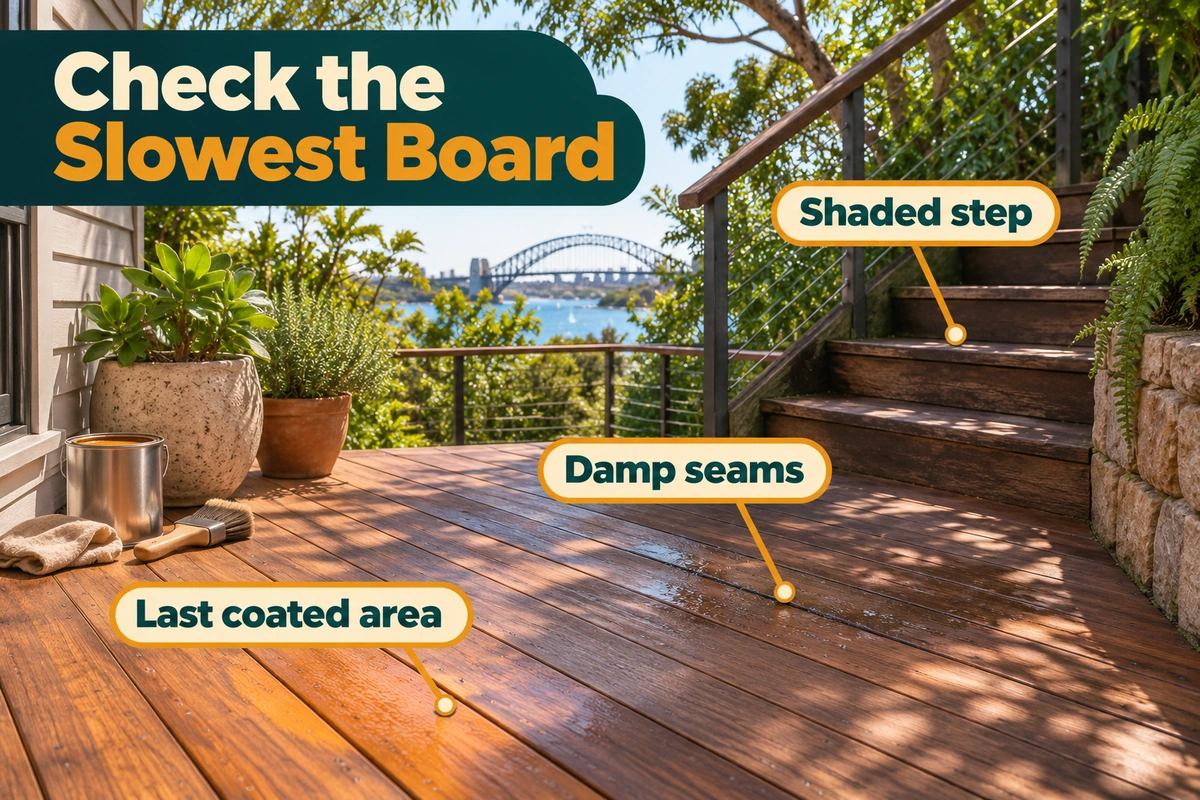
Draw the planned walking route in your head. It may cross a shady board at the back door, a sheltered landing, a narrow step or a spot where oil was brushed around a post. Assess those places before using the route. A sunny board at the far edge is a poor proxy for a staircase that sees little airflow or remains cool in the morning. Check from a safe dry position wherever possible, and wait until the manufacturer’s minimum access interval has passed before considering a permitted surface test.
Read the weather as it affects the boards. Air temperature from a postcode forecast can differ from timber temperature. Shade, limited airflow and overnight moisture can slow progress. Strong direct sun can push the board temperature beyond an application limit and make the coating harder to spread evenly. Note when the last section was finished and what conditions prevailed during the interval. If the surface took on new moisture overnight, contact the applicator about its effect rather than simply relying on an earlier estimate.
Use your eyes before making contact. Under angled light, look for glossy wet patches, pooling at ends or edges, and damp seams. Where the manufacturer recommends a physical check, use a discreet location and the stated method. Avoid making deliberate shoe prints as a test. If the surface transfers oil or takes a mark during an approved check, keep access closed. Where the deck remains the only exit, safe access and emergency egress must be planned before the job rather than improvised once the surface is wet.
Read more · White Marks on Timber Floors: Causes and Next Steps is an indoor timber guide for anyone troubleshooting a separate whitening issue inside the home.
When to Bring Back Pets, Furniture and Rugs
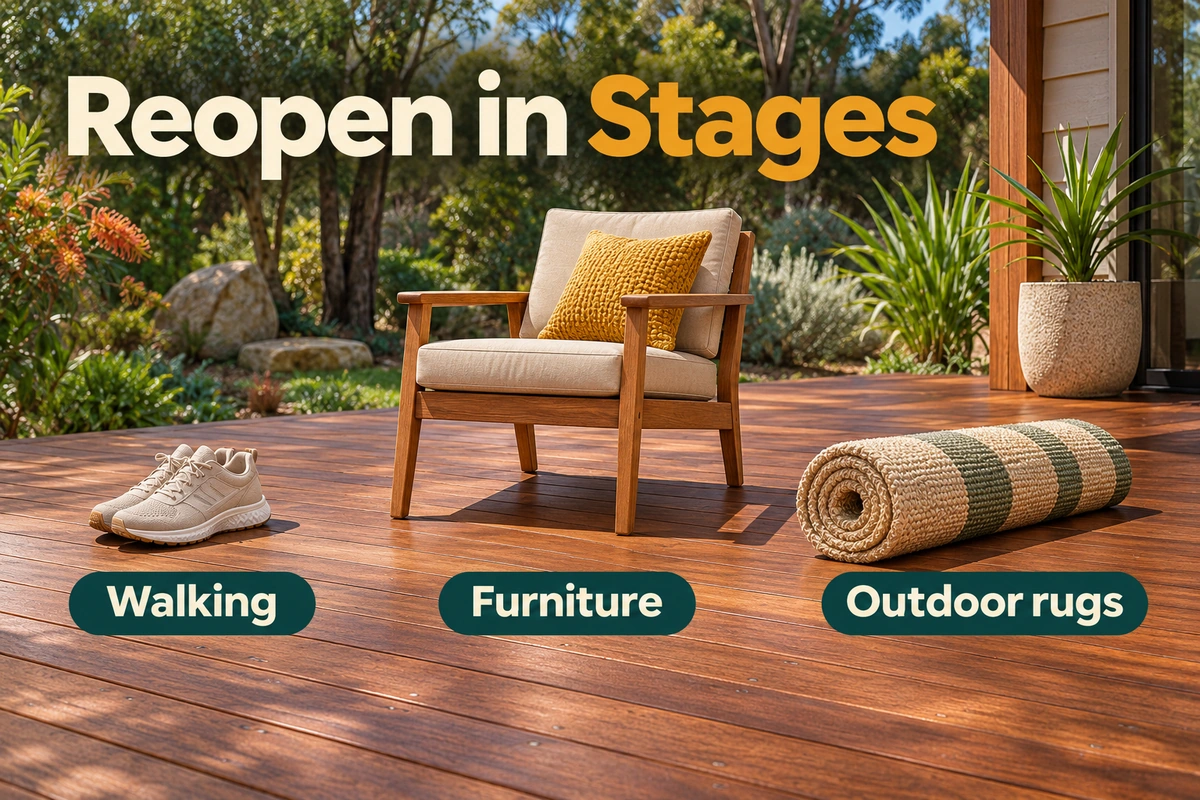
Treat walking, normal household use and replacing heavy or moisture-trapping items as separate decisions. Follow the coating maker’s staged instructions and use the actual conditions at each stage.
Shoes, paws and deliveries
Once the product permits light access, use clean, soft-soled shoes if the instructions recommend them and avoid scuffing a tight turn. Keep pets away from wet coating and drying areas as directed by the label. A dog’s claws, rapid turns and damp paws can mark a young finish even after cautious walking is permitted. If a dog has to leave the house, arrange a different exit in advance where possible. Ask visitors and couriers to use an alternative entrance until normal use can resume.
Chairs, tables, pots and barbecues
Furniture can concentrate weight on small feet and can pull at the surface when dragged. Observe the manufacturer’s furniture interval where one is given. Lift pieces into place instead of sliding them, and wait longer for heavy planters or a barbecue if that is what the product instructions specify. Check the undersides and feet for dirt or moisture before setting them down. When the furniture is outdoors permanently, make sure its placement permits cleaning and drains water away from the timber.
Rugs and items that reduce airflow
A rug or rubber-backed mat creates a different contact area from open foot traffic. Ask the coating supplier about safe timing and compatibility of the backing. Keep rugs off the deck until the product permits that type of use, and return only clean, dry items. A lightweight item that covers a large area can be more disruptive to airflow than its weight suggests. Use that same reasoning for storage boxes and broad planter trays.
Read more · Deck Restoration: The Complete Guide for Sydney Homes
Why Decking Oil Stays Tacky and What to Do
Compare the pattern of tackiness with the conditions and application history. The pattern helps determine whether extra drying time or an adjustment to the coating is likely to be needed.
The whole deck stays soft
Cool, damp or poorly ventilated conditions can slow drying across the deck. A heavy application or contamination left during preparation can produce a similar symptom. Give the supplier the product name, number of coats, estimated quantity used and actual weather, along with a description of how the boards were prepared. The wait the supplier recommends will depend on whether the coating is developing as expected. Keep normal traffic and furniture off while professional or product guidance says the coating is still too soft.
Only laps, edges or particular boards are greasy
A second pass over a partly dried area can deposit too much oil. Porosity and old coatings can also change the way adjacent boards take up the product. Look at the boundaries. A shiny line following a brush lap suggests something different from a damp strip following a drip line. Some formulations call for excess removal at a particular time using a supplied method. Consult the current instructions before using a cloth, water or solvent on a partly set finish. The Metropolitan Fire Service guidance on self-heating explains the fire risk with some oil-bearing wastes. Handle and dispose of contaminated material according to the safety data sheet and local requirements.
The coating remains abnormal after an appropriate wait
If the coating is still transferring, remains soft beyond the maker’s advice or shows poor adhesion, send photos and pause further coats. An applicator can determine whether preparation, removal or deck sanding Sydney is appropriate. If a fresh coating has also been caught in rain, record the actual time and location of the water event. A post-rain assessment can then distinguish soft coating from residual water in the timber.
Read more · Professional Deck Sanding Sydney Services for Long-Lasting Timber Restoration
A Worked Example: Reopening a Deck With One Exit
Suppose the final application of Bona Decking Oil finishes at 2 pm on a Saturday. If the application and drying conditions match the Bona benchmark, 2 pm on Sunday is the earliest point permitted by its 24-hour use guidance. That is the time to consider reopening under suitable conditions. The owner needs a route to work and a route for the dog before then. Before coating, the household arranges to use another doorway and keeps the furniture on the patio, with a plan that preserves emergency egress.
On Sunday afternoon the exposed boards look dry, but the whole route passes a shaded step. If that step remains damp or the weather has been cooler or more humid than the manufacturer’s baseline, the owner continues using the other exit and asks the applicator to confirm revised timing. The time of day and benchmark information turn an uncertain “maybe tomorrow” into a concrete discussion about the actual conditions.
When the route is ready for normal foot traffic, the owner asks when furniture may return and leaves the outdoor rug off until the product permits it. A neighbour using an oil with a different drying mechanism would run the same planning exercise with their own timing. The important details at handover are the exact product, what time the last coat ended, which access remains open and the expected order in which activities can resume.
Read more · Black Stains on Timber Floors: What Can Be Removed? explains how staining is assessed on a separate indoor surface.
Frequently Asked Questions
These are the questions that most often change the access plan. Use the product’s stated milestones and check the place where the activity will happen.
Can I walk on the deck as soon as it feels dry?
Use the maker’s foot-traffic milestone. A dry-feeling surface can still be softer under pressure than it appears during a light touch. If the product only lists touch dry or recoat, ask for its access guidance.
Does decking oil always dry faster in summer?
Warmth can speed some stages, but humid conditions, hot boards and direct weather exposure may change the expected schedule. Stay within the product’s conditions and allow suitable time for the slowest area.
Do I start timing from the first or last coat?
Use the previous coat’s application time for the next recoat interval. For foot traffic and normal use, count from the final coat on the relevant area and wait for the full route to qualify.
Can a fan or heater speed up drying?
Follow the product’s environmental and ventilation instructions. Keep coating work away from ignition sources as required and avoid improvised hot-air drying. A longer natural drying window allows the coating to develop as specified.
Can I put furniture back if I can already walk on the deck?
Use the manufacturer’s furniture guidance. Chair feet and heavy items exert greater local pressure, and dragging them can mark a finish that will tolerate light foot traffic.
Plan Your Next Deck Oiling With 5 Star Wood Care Sydney
Use Contact Us to share your deck layout and the access route you need during the work.
The team’s deck sanding and oiling Sydney service can help match preparation and finish to the existing timber.
Mention shaded stairs, the only usable doorway, pets and bulky furniture beforehand so handover includes a practical plan for when each area can reopen.